
Quick Answer:
An Aion 2 DPS tracker for raid is a specialized tool designed to capture and analyze combat data during large-scale PVE encounters. Unlike basic meters, a raid-focused tracker provides granular data on burst window alignment, damage uptime during complex mechanics, and phase-specific performance. By integrating these tools, players can identify rotation inefficiencies and raid leaders can optimize team synergy to overcome the game’s most challenging bosses.
In high-end PVE environments, success is rarely the result of raw power alone. Aion 2 introduces sophisticated combat systems where positioning, timing, and resource management dictate the outcome of a 20-man or 40-man encounter. For serious progression groups, relying on visual cues or the basic in-game feedback is insufficient. A dedicated DPS tracker acts as a flight recorder for combat, allowing teams to dissect every second of a boss fight to find where damage is being lost and where strategy can be refined.

- ✅Less ping and crashes.
- ✅ Higher FPS and better PC performance.
- ✅ Support for 8000+ games.
- ✅ Stable connection and region switching.
Part 1: What Is an Aion 2 DPS Tracker for Raid Content?
Part 2: Why Raid Players Need DPS Tracking in Aion 2
Part 3: What Should You Track During Aion 2 Raids?
Part 4: How to Use a DPS Tracker in Aion 2 Raids
Part 5: Raid DPS vs Dungeon DPS: What Is Different?
Part 6: How Raid Leaders Can Use DPS Tracker Data
Part 7: Best Raid Metrics to Analyze
Part 8: Common Raid DPS Problems in Aion 2
Part 9: Aion 2 Raid DPS Tracker vs Combat Log: What’s the Difference?
Part 10: Can You Use a Dungeon DPS Tracker for Raid Content?
Part 11: How LagoFast FPS Tracker Helps with Aion 2 Raid Performance
What Is an Aion 2 DPS Tracker for Raid Content?
An Aion 2 DPS tracker for raid content is a software utility that parses the game's combat log or network packets to provide a real-time visualization of damage output, healing, and utility uptime. In the context of Aion 2, where the "Raid" designation refers to large-scale, high-difficulty PVE content like Legion Raids or World Bosses, these trackers must handle a significantly higher volume of data than standard dungeon meters. They are designed to aggregate the performance of dozens of players simultaneously, filtering out noise to focus on the metrics that matter for progression.
These tools typically function by monitoring the combat events generated by the game engine. Every time a skill hits a target, a crit occurs, or a buff is applied, the tracker records the timestamp, the source, and the magnitude of the event. For raid content, the tracker often includes specialized modules for boss-specific mechanics, such as tracking damage on priority adds or monitoring the duration of "vulnerability windows" where the boss takes increased damage. This level of detail is what separates a professional-grade raid tracker from a simple personal damage meter.
Related Article: Aion 2 DPS Tracker for Dungeon: How to Track Party Damage and Improve Dungeon DPS
Why Raid Players Need DPS Tracking in Aion 2
In raid content, DPS tracking is not only about who ranks first. While the "epeen" factor exists, the practical application of a tracker is far more nuanced. Raid teams need to understand when damage happens, whether players are using burst skills during the right boss phase, and how much damage is lost during movement, deaths, or mechanics. Aion 2’s raid bosses often feature "enrage timers"—hard limits on how long a fight can last before the boss kills the entire team. If a group is hitting the enrage timer at 5% boss health, the DPS tracker is the only way to find that missing 5%.
Furthermore, Aion 2's combat system emphasizes tactical positioning, such as rear-hit bonuses and environmental interactions. A tracker helps players verify if they are actually maintaining their position or if their "uptime" on the boss is dropping during high-movement phases. It provides objective proof of performance that allows for constructive feedback. Instead of guessing why a phase transition was slow, a tracker shows exactly which players were CC'd, who missed their burst window, and who was focusing on the wrong target.
What Should You Track During Aion 2 Raids?
Effective raid analysis requires looking beyond the "Total Damage" column. To truly optimize performance, players and leaders must dive into specific sub-metrics that reveal the health of the raid's execution.
Total Raid DPS
The primary metric is the collective output of the entire group. This number determines if the raid can meet the overall DPS check required to beat the boss's enrage timer. It is the baseline for all other analysis.
Individual Player DPS
Monitoring individual performance helps identify outliers. However, this must be viewed in the context of class roles. A support-heavy class might have lower personal DPS but contributes significantly via buffs, which should be reflected in the "Raid DPS" increase they provide.
Boss Phase Damage
Many Aion 2 bosses have distinct phases with different mechanics. Tracking damage per phase is crucial for understanding if the team is struggling with a specific set of mechanics that forces them to stop attacking.
Burst Window Damage
Modern MMO raids are built around "burst windows"—short periods where the boss is vulnerable or the raid uses powerful cooldowns. A tracker shows if the team is successfully aligning their "ultimate" skills during these critical seconds.
Skill Damage Breakdown
By looking at the percentage of damage contributed by each skill, a player can see if their rotation is optimal. If a high-cooldown skill is making up a tiny fraction of total damage, it suggests the player is not using it on cooldown or is missing the target.
Buff and Debuff Uptime
In Aion 2, keeping debuffs on the boss (like armor reduction) and buffs on the raid (like attack speed) is often more important than personal rotation. A tracker monitors the percentage of the fight these effects were active.
Deaths and Downtime
Every second a player is dead or running away from a mechanic is a second of zero DPS. Tracking "Active Time" versus "Fight Duration" highlights players who are struggling with survival or positioning.
Damage During Mechanics
Some mechanics require players to move or interact with objects. High-skill players maintain their rotation while handling these tasks. A tracker identifies who can "multi-task" and who loses all their pressure when the fight gets chaotic.
Related Article: Aion 2 DPS Meter for Rotation Testing: How to Test Skill Rotations and Improve Your DPS
How to Use a DPS Tracker in Aion 2 Raids
Using a tracker effectively is a five-step process that moves from raw data collection to actionable strategy adjustments.
Step 1: Track the Whole Boss Fight
Ensure the tracker is running from the moment the boss is pulled until the wipe or the kill. Partial data is misleading. The tracker should be set to "Raid Mode" to capture all participants, not just your immediate party.
Step 2: Separate Burst Windows from Sustained DPS
Analyze the "DPS Graph" to see the peaks and valleys. If the peaks don't align with the boss's vulnerability phases, the team is wasting their most powerful abilities on shielded or high-defense states.
Step 3: Compare Damage by Boss Phase
Look at the data for Phase 1 versus Phase 2. If the raid's total DPS drops by 40% in Phase 2, the team needs to find a safer way to maintain their rotation during that phase's specific mechanics.
Step 4: Review Player Downtime
Check the "Death Log" and "Uptime" stats. If certain players are consistently spending 20% of the fight not attacking, investigate if they are being targeted by mechanics or if they are playing too defensively.
Step 5: Adjust Raid Composition and Rotations
Use the findings to make changes. This might mean moving a high-buff class to a different party to optimize their aura or asking specific players to hold their burst skills for a more advantageous moment in the fight.
Raid DPS vs Dungeon DPS: What Is Different?
While the basic principles of damage tracking remain the same, the scale and complexity of raid content in Aion 2 create several key differences compared to 5-man or 6-man dungeons.
Longer Boss Fights
Dungeon bosses might die in 2-3 minutes, making "burst" the dominant factor. Raid bosses can last 10-15 minutes, shifting the focus to "sustained" DPS and resource management. A tracker for raids must account for long-term consistency.
More Mechanics
Raids feature "layering" mechanics where multiple things happen at once. A dungeon tracker might only show that you stopped attacking; a raid tracker can show that you stopped because you were targeted by a specific debuff that required you to move away from the group.
More Players
Managing the data of 40 players is a technical challenge. Raid trackers need robust filtering to prevent the UI from becoming a cluttered mess, allowing leaders to focus on specific groups or roles within the larger raid.
Stricter Burst Windows
In dungeons, you can often "wing it" with your cooldowns. In raids, failing to align burst windows can lead to failing a "DPS check" that wipes the entire group. The tracker’s role in verifying this alignment is far more critical in a raid setting.
Higher Need for Team Coordination
Dungeons are often about individual skill. Raids are about "Synergy DPS"—how well classes interact. A raid tracker helps visualize the "multiplier effect" of support classes, which is often invisible in simpler dungeon meters.
How Raid Leaders Can Use DPS Tracker Data
For a raid leader, the DPS tracker is an essential management tool. It provides the objective data needed to make hard decisions about strategy and personnel.
Find Weak Damage Windows
A leader can look at the raid-wide DPS graph and see exactly when the damage craters. They can then cross-reference this with the boss's abilities to determine if the raid is being too timid during certain mechanics.
Check If Players Are Using Burst at the Right Time
By inspecting individual skill logs, a leader can see if the "Big Hits" are happening when the boss is debuffed. If half the raid is "early" or "late" with their burst, the leader can call for a synchronized "Go" signal.
Compare Class Roles Fairly
A good leader knows that a "Spiritmaster" and a "Gladiator" have different jobs. The tracker allows the leader to compare a player's performance against the "Class Average" or "Top Percentile" rather than just comparing them to the top damage dealer.
Identify Deaths, Downtime, and Missed Mechanics
The tracker’s "Death Log" shows what killed a player and what their health was leading up to it. This stops the "I don't know what happened" excuse and allows for specific coaching on how to avoid certain boss attacks.
Improve Raid Strategy Before the Next Pull
Instead of banging their head against a wall, a leader can spend 5 minutes between pulls reviewing the tracker data to see if a different party configuration or a change in "Target Priority" would yield better results.
Best Raid Metrics to Analyze
To get the most out of your post-raid review, focus on these specific metrics that correlate most strongly with success in Aion 2.
Average DPS
The "cleanest" metric for overall performance. It smoothes out the lucky crits and shows the true power level of a player over the course of a long encounter.
Peak DPS
Useful for measuring "Burst Potential." This shows how much damage a player can pump out when all their cooldowns are active, which is vital for skipping dangerous boss phases.
Damage by Phase
As mentioned, some players excel in "Target Dummy" phases but fail during "Chaos" phases. Comparing these two numbers identifies who needs more practice with the fight's movement mechanics.
Damage to Priority Targets
In many Aion 2 raids, "Adds" (secondary enemies) must die quickly. A tracker shows who switched targets immediately and who "padded" their numbers by staying on the boss while the adds killed the healers.
Buff Uptime
For support and hybrid classes, this is the "real" DPS. If a Bard's "Attack Up" song only has 60% uptime, they are failing their primary job, regardless of their personal damage.
Cooldown Alignment
Advanced trackers can show when "Ultimate" skills were used. Seeing 40 ultimates go off at the same time is the hallmark of a top-tier raid team.
Survival and Damage Loss
This metric calculates how much potential damage was lost due to a player being dead. It is a powerful way to show that "a dead DPS does zero damage."
Common Raid DPS Problems in Aion 2
Most raid failures in Aion 2 can be traced back to a few common issues that are easily identified with a tracker.
Using Burst Before Boss Vulnerability Windows
The most common mistake is "panic-bursting." Players see their cooldowns are up and use them immediately, rather than waiting for the boss to enter a state where they take 50% more damage.
Losing Damage During Movement Mechanics
Many players stop their rotation entirely when they have to move. High-level play involves "stutter-stepping" or using instant-cast skills while repositioning. The tracker highlights the "DPS drop" during these movements.
Poor Cooldown Alignment
If the raid's "Damage Multipliers" (like a debuff that increases damage taken) are not active when the DPS players use their big skills, the team loses a massive amount of "Free Damage."
Ignoring Priority Adds
"Boss Tunneling" is a major problem. Players stay on the boss to keep their personal numbers high, ignoring the mechanics that actually lead to a win. The "Target Damage" breakdown exposes this behavior.
Low Uptime on Boss Target
This is often caused by poor positioning. If a player is constantly out of range or behind a pillar, their "Active Time" will be low. Aion 2's dynamic environments make this a frequent issue for inexperienced raiders.
Comparing DPS Without Considering Class Role
Judging a utility-focused class by the same standards as a pure "Glass Cannon" leads to toxic raid environments. The tracker should be used to ensure everyone is doing their job, not just the most damage.
Aion 2 Raid DPS Tracker vs Combat Log: What’s the Difference?
The in-game combat log is a raw stream of text. It is virtually impossible to read during a raid. An Aion 2 DPS tracker takes this "unstructured data" and turns it into "structured intelligence." The tracker performs real-time math—calculating DPS (Damage / Time), identifying the source of every hit, and aggregating data across the entire raid.
While the combat log might tell you that "Player A hit Boss for 500," the tracker tells you that "Player A is doing 4,500 DPS, which is 12% of the raid's total, and they have 95% uptime on their primary debuff." For raid leaders, the tracker also provides "Post-Match Analysis," saving the data so it can be uploaded to sites for deep-diving into every single click and movement.
Can You Use a Dungeon DPS Tracker for Raid Content?
Technically, yes, but it is not recommended. Dungeon trackers are often optimized for small groups and may crash or lag when trying to process the data of 40 players. Furthermore, dungeon trackers lack the "Raid-Specific Modules" needed for complex bosses. For example, a raid tracker might have a built-in timer for a boss's "Wipe Mechanic," whereas a dungeon tracker only shows that everyone died. For serious Aion 2 raiding, you need a tool that understands the scale and specific requirements of large-group PVE.
How LagoFast FPS Tracker Helps with Aion 2 Raid Performance
Beyond tracking damage, the actual performance of your PC and network is the foundation of high DPS. If you are lagging or dropping frames, your "Effective DPS" will plummet regardless of your gear. LagoFast provides a specialized suite of tools to ensure your technical environment is as optimized as your rotation. By reducing ping and stabilizing FPS, it ensures that your inputs are registered instantly—critical for Aion 2's fast-paced, reactionary combat.
Tutorial: How to Enhance Your Game Experience with LagoFast Game Booster
Step 1: Click the Free Trial button to download and install LagoFast Free Trial.
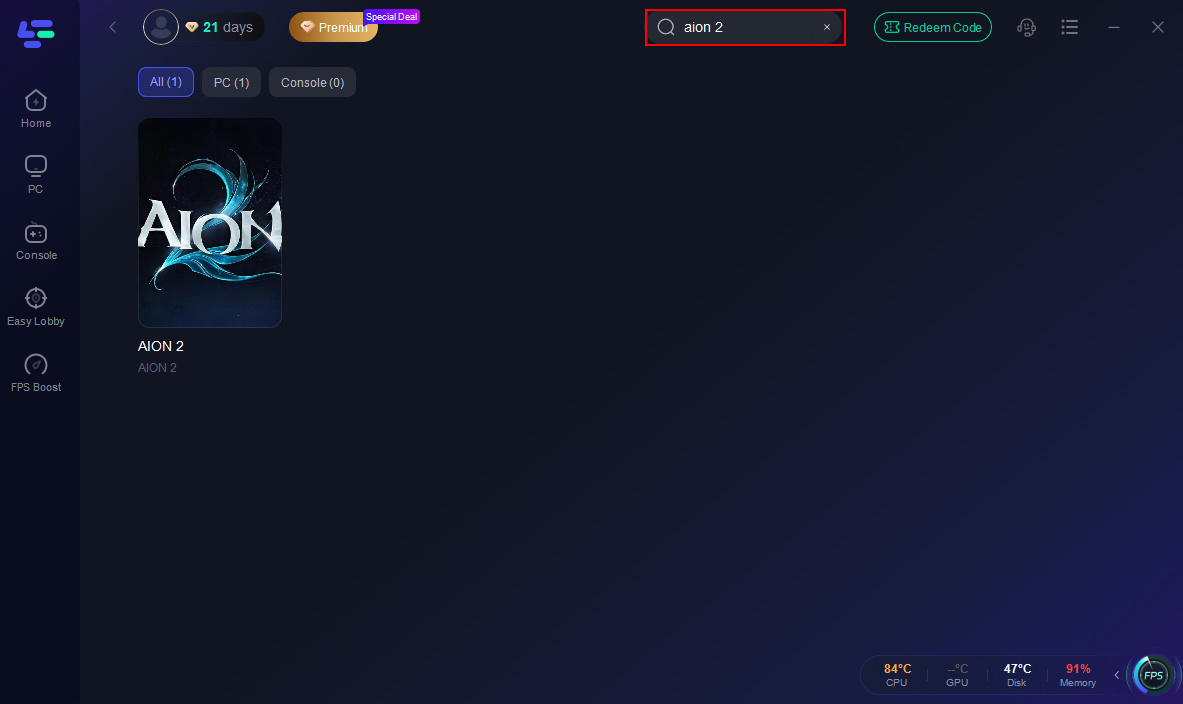
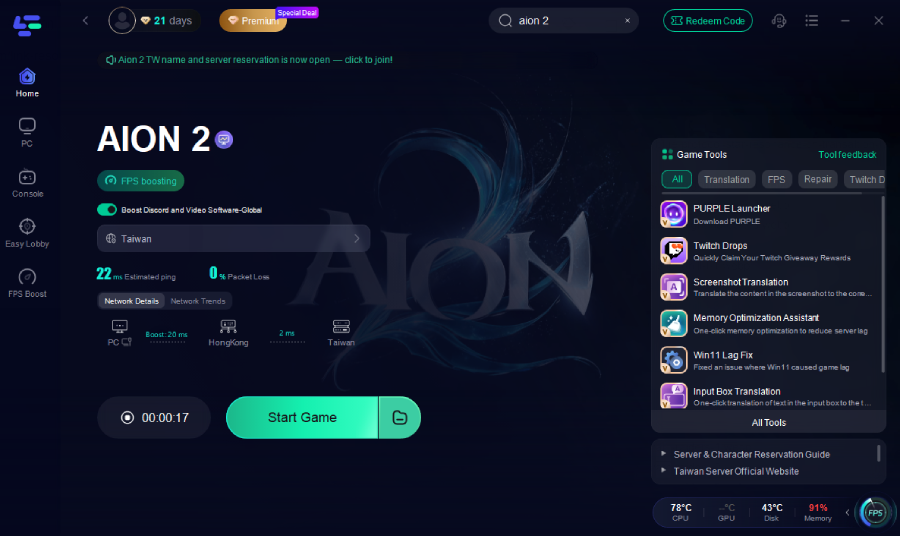
Step 2: Launch the application and use the search function to locate Aion 2.
Step 3: Before starting the game, select the "FPS Boost" tab to optimize your system resources. This will close unnecessary background processes that might cause "micro-stuttering" during intensive raid encounters.
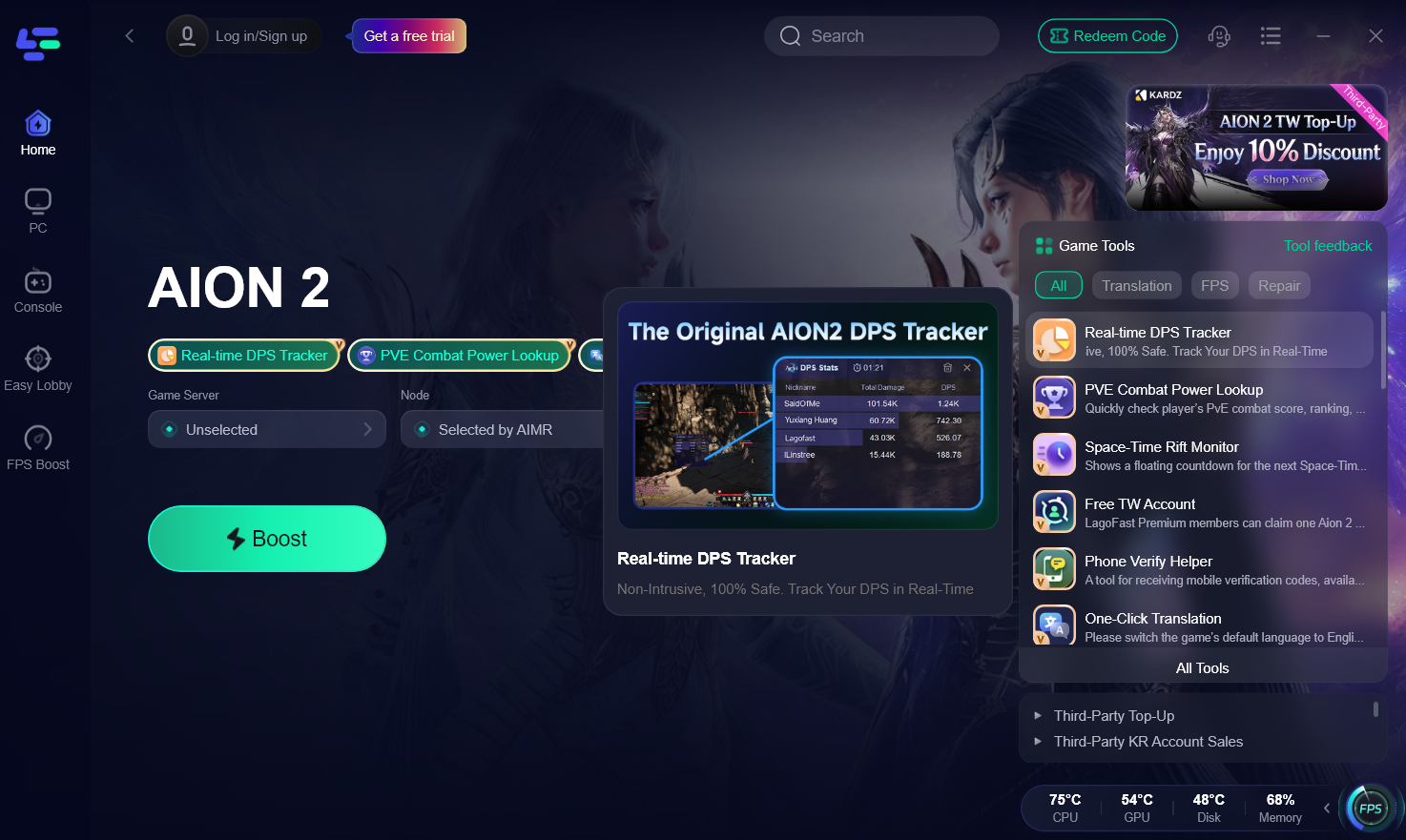
Step 4: Navigate to the "Real-time DPS Tracker" section within the Aion 2 toolset. Enable the overlay so you can monitor your performance without tabbing out of the game
.
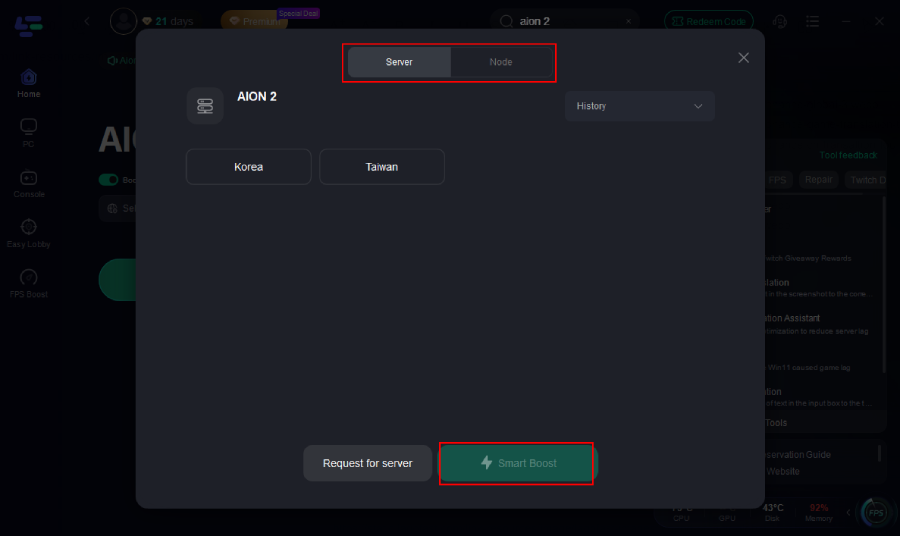
Step 5: Select the optimal server node. LagoFast uses a global network of dedicated gaming paths to find the lowest latency route to the Aion 2 servers, which is vital for hitting those tight burst windows.
Step 6: Click the "Smart Boost" button. This initiates both the network optimization and the FPS stabilization simultaneously.
Step 7: Launch Aion 2 directly through the LagoFast interface. You will now have a smoother, more responsive game environment with an active DPS and FPS overlay to guide your raid performance.
FAQ
Is it legal to use a DPS tracker in Aion 2?
Most modern MMO developers tolerate non-intrusive trackers that only read data and do not modify the game files or automate gameplay. However, always check the latest Terms of Service, as policies can change.
Does a DPS tracker cause game lag?
If the tracker is well-optimized, the impact on performance is negligible. However, running a tracker alongside dozens of other background apps can lead to CPU bottlenecks. Using a booster can help mitigate this by prioritizing game resources.
Why is my DPS lower in raids than on a training dummy?
Raids involve movement, boss mechanics, and potential lag, all of which reduce your "Uptime." The goal is to get your raid DPS as close to your "Dummy DPS" as possible through better execution.
Can I see other players' gear through the tracker?
Some advanced trackers that integrate with community databases allow you to "inspect" teammates' gear and skill builds, which is helpful for understanding why their performance is higher or lower than yours.
Do I need a second monitor for a DPS tracker?
While not strictly necessary, having a second monitor to display the full raid breakdown is highly beneficial for raid leaders. For individual players, a small "In-Game Overlay" is usually sufficient.
Key takeaway
Mastering Aion 2 raid content requires a transition from "playing by feel" to "playing by data." A DPS tracker is the most powerful tool in a raider's arsenal, providing the transparency needed to optimize rotations, align team-wide burst windows, and identify the root causes of wipes. By combining the analytical power of a tracker with the performance optimization of tools like LagoFast, players can ensure that neither their skill nor their hardware is the bottleneck to their success. Whether you are an individual looking to climb the ranks or a raid leader aiming for a server-first kill, data-driven gameplay is the path to PVE dominance.

Boost Your Game with LagoFast for Epic Speed
Play harder, faster. LagoFast game booster eliminates stutter and lags on PC, mobile, or Mac—win every match!
Quickly Reduce Game Lag and Ping!
Boost FPS for Smoother Gameplay!