
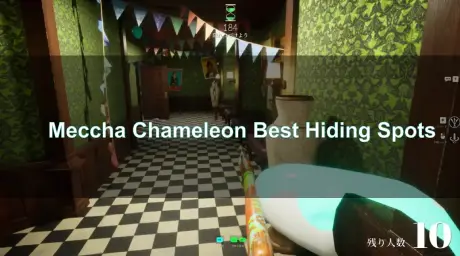
Quick Answer: To master hiding in Meccha Chameleon, prioritize spots that offer excellent color and shape matching, utilize natural lighting and shadows, and allow for a convincing pose. Key strategies include choosing your spot before painting, meticulously matching base colors, and adding subtle details. For map-specific success, explore kitchen shelves in Hide-and-Seek Mansion, hay bales in Indoor Country, pipe edges in Sewer, chair stacks in Backrooms, and lobby furniture in Penguin Hotel. Always ensure a stable connection with LagoFast Game Booster to prevent detection from network lag.

- ✅ Reduce Lag and High Ping.
✅ Boost FPS at the Same Time.
✅ Support 2000+ Popular Online Games.
✅ Change Server without Latency.
✅ Boost Game Loading Speed.
Part 1: What Makes a Good Hiding Spot in Meccha Chameleon?
Part 2: Quick List: Best Hiding Spots in Meccha Chameleon
Part 3: Best Hiding Spots by Map
Part 4: Hide-and-Seek Mansion Best Hiding Spots
Part 5: Indoor Country Best Hiding Spots
Part 6: Sewer Best Hiding Spots
Part 7: Backrooms Best Hiding Spots
Part 8: Penguin Hotel Best Hiding Spots
Part 9: Best Hiding Strategies for Hiders
Part 10: Common Hiding Mistakes
Part 11: Best Hiding Spots for Different Player Levels
Part 12: How Seekers Can Counter These Hiding Spots
Part 13: How to Enhance Your Game Experience with LagoFast Game Booster
Part 1: What Makes a Good Hiding Spot in Meccha Chameleon?
Meccha Chameleon isn't just a game of hide-and-seek; it's an art form of deception. To truly excel as a hider, you need to think beyond simply finding a corner and painting yourself. A truly effective hiding spot leverages several environmental and mechanical factors to make you virtually invisible to even the most eagle-eyed seekers. Understanding these core principles is the first step to becoming a master chameleon.
Color Match
This is the most obvious, yet often underestimated, aspect. Perfect color matching is paramount. Your chameleon's paint palette is your primary tool. You need to meticulously sample and apply colors that precisely blend with your chosen object or surface. Even a slight shade difference can make you stand out like a sore thumb. Pay attention to gradients and subtle variations in the environment, not just flat colors.
Shape Match
Beyond color, your chameleon's shape must seamlessly integrate with the environment. Trying to hide as a square box on a round table will immediately give you away. Look for objects that naturally mimic your chameleon's form, or areas where your outline can be broken up by surrounding elements. This often means finding spots with complex geometry or where you can tuck yourself into an existing structure.
Lighting and Shadow
Lighting is a hider's best friend. Shadows can obscure imperfections in your paint job and body outline, making you much harder to spot. Conversely, bright, direct light will highlight every flaw. Always consider the light sources in an area. Can you position yourself in a permanent shadow? Does the object you're mimicking cast a shadow that you can become a part of? Dynamic lighting changes can also be a factor, so choose spots that remain consistently dark or dimly lit.
Camera Angle
Think like a seeker. From what angles will they typically approach and scan an area? A good hiding spot is one that looks convincing from multiple common camera angles. Avoid spots that expose your unpainted back or an awkward pose when viewed from a different perspective. Sometimes, a spot that looks perfect from one angle is glaringly obvious from another.
Pose and Body Outline
Meccha Chameleon allows you to change your pose. This is a critical tool for shape matching. Experiment with different poses to find one that best conforms to the object you're mimicking. Crouching, lying down, or stretching can help you fit into tighter spaces or align with the contours of an object. A natural, unforced pose that doesn't break the object's silhouette is key.
Hunter Route and Line of Sight
Finally, consider the seeker's patrol routes and lines of sight. A spot might be perfectly camouflaged, but if it's in the middle of a high-traffic area or directly in a seeker's common scanning path, your chances of detection increase. Look for spots that are off the beaten path, require seekers to go out of their way to check, or are naturally obscured by other objects, breaking their line of sight.
Part 2: Quick List: Best Hiding Spots in Meccha Chameleon
Navigating the diverse maps of Meccha Chameleon requires a keen eye for detail and a strategic mind. While the perfect spot often depends on the seeker's skill and your own camouflage prowess, certain types of locations consistently offer better chances of survival. Here's a quick rundown of hiding spot categories, catering to different playstyles and risk tolerances.
Best Beginner Hiding Spots
For those just starting out, simplicity and safety are key. These spots are generally easy to blend into with basic painting skills and are less frequently checked by experienced seekers.
- Large, Uniform Objects: Think big, solid-colored walls, large crates, or simple furniture pieces. They offer a straightforward surface to match.
- Out-of-the-Way Corners: Any corner that isn't directly in a main pathway. Seekers often sweep central areas first.
- Underneath Tables/Desks: Simple, effective, and often overlooked by fast-moving seekers.
- Behind Large Pillars/Statues: Use the object's bulk to break line of sight and its uniform texture for easy painting.
Best Advanced Hiding Spots
These spots require more precise painting, a better understanding of map flow, and often a bit of risk. They reward players who have honed their camouflage skills.
- Complex Textures: Blending into intricate wall patterns, detailed carpets, or textured machinery. Requires careful color picking and subtle detailing.
- High-Angle Spots: Perching on ledges, ceiling fixtures, or high shelves. These are harder to reach and often require seekers to look up, which they might forget to do.
- Mimicking Small Objects: Transforming into a small, innocuous object like a book, a cup, or a decorative item. This demands perfect shape and color matching.
- Dynamic Object Blends: Hiding on objects that move or are part of a larger, interactive scene, making you harder to distinguish.
Best Funny Hiding Spots
Sometimes, the goal isn't just to win, but to get a laugh. These spots are often unexpected, visually amusing, or rely on a seeker's disbelief.
- Inside a Toilet: A classic for a reason. Requires a good pose and color match, but the sheer audacity often pays off.
- As a Food Item: Blending into a plate of cookies, a fruit bowl, or a pizza. Highly situational but hilarious when successful.
- Part of a Painting/Poster: Becoming a flat, two-dimensional part of the wall art. Requires precise alignment and color.
- Mimicking a Pet/Animal: If there are static animal props on the map, becoming one of them can be a fun and effective disguise.
Best Risky but Rewarding Spots
These spots are high-risk, high-reward. They are often in plain sight or in high-traffic areas, but if executed perfectly, they can lead to incredibly satisfying escapes.
- Center of a Room: Hiding as a central decorative piece or a piece of furniture that seekers might glance over.
- Near a Doorway/Chokepoint: Blending into the wall or frame of a frequently used passage. Seekers often rush through these areas.
- As a Seeker's Shadow: If possible, mimicking a shadow on the floor or wall near a seeker, moving subtly with them.
- On a Seeker's Head (Hypothetical): While likely not possible, the concept of hiding on a seeker is the ultimate risky reward.
Best Spots to Avoid
Just as important as knowing where to hide is knowing where not to hide. These are common pitfalls for new players.
- Isolated, Flat Walls: Unless you're a master of texture, a flat, empty wall offers no visual break for your outline.
- Obvious Corners: The first place every seeker checks. Avoid if possible.
- Spots with Glaring Lighting: Areas with direct, harsh light will expose every flaw in your camouflage.
- Small, Unique Objects: If there's only one of a particular object, seekers will quickly notice if it's suddenly a chameleon.
- High-Traffic Pathways: Even if perfectly camouflaged, repeated seeker passes increase the chance of accidental detection.
Part 3: Best Hiding Spots by Map
Meccha Chameleon's charm lies in its diverse environments, each offering unique opportunities and challenges for hiders. Mastering the art of camouflage means understanding the specific layouts, textures, and common seeker routes of each map. Here, we'll break down the most effective hiding strategies and spots across the game's various arenas.
Hide-and-Seek Mansion Best Hiding Spots
The Mansion is a classic, with its ornate furniture, detailed wallpapers, and numerous rooms. It's a playground for intricate disguises.
Indoor Country Best Hiding Spots
This map often features rustic elements, hay bales, wooden structures, and agricultural machinery. It's a great place for blending into natural, earthy tones.
Sewer Best Hiding Spots
Dark, grimy, and full of pipes and industrial textures, the Sewer map demands a different approach, often favoring darker colors and linear shapes.
Backrooms Best Hiding Spots
The Backrooms map is characterized by its repetitive, liminal spaces, often with fluorescent lighting and office furniture. Blending here relies on becoming part of the mundane.
Penguin Hotel Best Hiding Spots
With its plush carpets, lobby furniture, and decorative elements, the Penguin Hotel offers a mix of organic and geometric hiding opportunities.
New Maps and Updated Spots
As Meccha Chameleon evolves, new maps will be introduced, and existing ones might receive updates. Always be on the lookout for fresh hiding opportunities and adapt your strategies accordingly. Community forums and dedicated content creators are excellent resources for discovering the latest meta spots.
Part 4: Hide-and-Seek Mansion Best Hiding Spots
The Hide-and-Seek Mansion is a sprawling map filled with opulent decor, intricate patterns, and numerous nooks and crannies. Its varied environments, from grand halls to cozy studies and bustling kitchens, offer a plethora of hiding opportunities for the discerning chameleon. Success here lies in meticulous detail and understanding seeker psychology.
Kitchen Shelves and Cabinet Areas
The kitchen is a goldmine for hiders. The sheer density of objects on shelves, coupled with the repetitive patterns of cabinet doors, provides excellent camouflage opportunities. Try to blend with:
- Stacked Plates/Bowls: Mimic the shape and color of a stack of dishes on a shelf. The repetitive nature makes it hard to distinguish.
- Spice Racks/Condiment Bottles: If you can match the small, cylindrical shapes and colors, these can be surprisingly effective.
- Inside Open Cabinets: Tucking yourself into an open cabinet, especially one with other items, can break your outline effectively.
Wall Decorations and Frames
The Mansion is adorned with numerous paintings, portraits, and decorative wall hangings. These flat, two-dimensional surfaces can be perfect for a chameleon who masters the art of becoming part of the background.
- As a Painting: Position yourself perfectly flat against a wall, match the painting's colors and frame, and hold still. This requires precision but is incredibly rewarding.
- Behind Curtains/Drapes: While not a direct blend, using curtains to break line of sight and then blending with the wall or window frame behind them can be effective.
Furniture Corners
Furniture, especially larger pieces like wardrobes, bookshelves, and grand pianos, often have corners and edges that can be exploited. These spots are great for breaking your body outline.
- Behind a Grandfather Clock: Blend with the wall or the clock itself, using its tall, narrow shape to your advantage.
- Underneath a Large Dining Table: While common, if you match the underside color and stay still, it can still work, especially if the table is cluttered.
- Inside a Bookshelf: If there are open shelves, blending with the books or the shelf interior can be a strong play.
Dark Room Edges
Lighting plays a crucial role in the Mansion. Many rooms have areas that are naturally darker, especially along the edges or in alcoves. These shadows can forgive minor imperfections in your camouflage.
- Alcoves and Recesses: Blend with the wall in a dimly lit alcove. The natural shadow helps obscure your form.
- Underneath Staircases: Often dark and overlooked, blending with the underside of a staircase can be a surprisingly safe bet.
Spots Hunters Usually Check First
Avoid these common pitfalls, especially as a beginner. Experienced seekers know these spots by heart.
- Center of Main Hall: Too exposed, even with perfect camouflage.
- Behind the Front Door: A classic, but too obvious.
- Underneath the Pool Table: Often checked early due to its central location.
Part 5: Indoor Country Best Hiding Spots
The Indoor Country map brings a rustic charm to Meccha Chameleon, featuring elements like hay bales, wooden crates, farm equipment, and barn-like structures. This map often has a more open feel than the Mansion, but its unique textures and verticality offer creative hiding opportunities. Success here often hinges on embracing natural, earthy tones and leveraging the map's agricultural aesthetic.
Crates and Storage Corners
The map is typically littered with wooden crates, barrels, and storage units. These provide excellent opportunities for simple yet effective camouflage.
- Stacked Crates: Blend with the texture and color of stacked wooden crates. The repetitive nature and sharp edges help break your outline.
- Behind Barrels/Silos: Use the curvature of barrels or the large, uniform surface of silos to your advantage. A good color match can make you disappear.
- Inside Open Crates/Boxes: If there are open containers, tucking yourself inside and blending with the interior can be very effective, especially if there are other items inside.
Hay and Barn Areas
Hay bales and barn walls are iconic features of this map, offering unique textures and colors to blend with.
- Hay Bales: Mimic the texture and color of hay bales. This requires a good yellow/brown palette and a somewhat lumpy pose to look natural.
- Barn Walls/Wooden Planks: Blend with the wooden plank textures of barn walls. The vertical lines can help obscure your form, especially if you can find a spot with natural shadows.
- Behind Farm Equipment: If there are static tractors, plows, or other farm tools, blending behind or within their structure can be a good option.
Ceiling or High-Angle Spots
The Indoor Country map often has high ceilings and exposed beams, providing vertical hiding spots that seekers might overlook.
- On Exposed Beams/Rafters: Perch on a high beam and blend with the wood or metal. Seekers rarely look straight up.
- Top of Tall Structures: If there are tall shelves or structures, getting on top and blending with the ceiling or the object itself can be a strong play.
- Ceiling Fans/Light Fixtures: While risky due to movement, if you can perfectly mimic a static fan or light fixture, it can be incredibly effective.
Wall and Wood Texture Blends
Many surfaces in Indoor Country feature wood grain or painted wood. These offer excellent opportunities for detailed camouflage.
- Wooden Panels/Doors: Blend with the natural wood grain or painted wooden panels. Pay attention to the direction of the grain.
- Wall Murals/Posters: If there are any decorative murals or posters, becoming a part of them can be a fun and effective disguise.
Risky Open Spots That Work With Good Painting
Some spots are inherently risky due to their visibility, but with exceptional painting skills, they can become highly rewarding.
- As a Small Plant/Flower: If there are small potted plants or flowers in open areas, perfectly mimicking one can lead to seekers walking right past you.
- On a Chair/Bench in the Open: Blending with a chair or bench in a central area. This requires perfect color and shape matching, relying on the seeker's quick scan.
Part 6: Sewer Best Hiding Spots
The Sewer map in Meccha Chameleon presents a stark contrast to the more domestic environments. It's a grimy, industrial labyrinth of pipes, concrete, and dim lighting. Hiding here requires a shift in strategy, focusing on darker, metallic, and often repetitive textures. The key is to become part of the utilitarian, often decaying, infrastructure.
Pipe and Wall Edges
The Sewer is defined by its extensive network of pipes and concrete walls. These offer numerous opportunities for linear and angular camouflage.
- Along Large Pipes: Blend with the color and texture of large pipes, especially where they run along walls or ceilings. The cylindrical shape can be challenging, so try to tuck into bends or junctions.
- Pipe Junctions/Valves: These areas offer more complex geometry to break your outline. Blend with the metal or rust textures.
- Wall Edges and Seams: Position yourself perfectly along the seam where two walls meet, or where a wall meets the floor/ceiling. Blend with the concrete or tiled textures. Dark Corners
Given the dim and often flickering lighting of the Sewer, dark corners are your best friends. These areas naturally obscure your form and hide minor imperfections in your paint job.
- Deep Recesses: Any deep recess or alcove that is poorly lit is a prime hiding spot. Blend with the dark, damp concrete.
- Underneath Grates/Walkways: If there are elevated walkways, hiding underneath them in the shadows can be very effective.
Repeated Texture Areas
The Sewer often features repetitive patterns in its tiling, grates, or corrugated metal. Blending into these patterns can make you disappear into the background noise.
- Tiled Walls/Floors: Match the color and pattern of repetitive tiles. This requires a good eye for detail and patience.
- Corrugated Metal Sheets: Blend with the metallic texture and the shadows created by the corrugation.
- Grate Patterns: If you can perfectly mimic a section of a floor or wall grate, it can be an advanced but highly effective spot.
Floor and Shadow Blends
The floor of the Sewer is often wet, dirty, and uneven, creating natural shadows and reflections that can be used for camouflage.
- Puddles/Wet Patches: Blend with the dark, reflective surface of a puddle. This is a risky but visually convincing spot.
- Shadows Cast by Objects: Position yourself within the deep shadow cast by a large pipe, machine, or wall. Let the shadow do most of the work.
Spots to Avoid Because Hunters Sweep Them Early
- Middle of Open Walkways: Too exposed, even with good camouflage.
- Near Ladders/Entry Points: Seekers will often check these areas immediately upon entering a new section.
- Brightly Lit Areas: Any spot under a direct, working light source will make you an easy target.
Part 7: Backrooms Best Hiding Spots
The Backrooms map in Meccha Chameleon is a masterclass in unsettling, liminal spaces. Characterized by its repetitive yellow wallpaper, fluorescent lighting, and sparse office furniture, hiding here relies on becoming part of the mundane and exploiting the map's disorienting nature. The key is to blend into the ordinary until you become extraordinary in your invisibility.
Chair and Object Spots
The Backrooms are often filled with stacks of chairs, desks, and other office paraphernalia. These provide excellent opportunities for shape and color matching.
- Stacked Chairs: Blend with a stack of chairs, mimicking one of the chairs perfectly. This is a classic and effective spot.
- Underneath Desks/Tables: Simple, yet often overlooked, especially if the desk is cluttered or in a dimly lit corner.
- As a Cardboard Box: If there are cardboard boxes, perfectly mimicking one can be very convincing, as they are common and often ignored.
Exit Sign Area
The ubiquitous exit signs in the Backrooms offer a unique and often overlooked hiding opportunity, especially for those who can master the art of flat camouflage.
- As an Exit Sign: Position yourself flat against the wall, perfectly matching the green and white colors and the rectangular shape of an exit sign. This requires precision but is highly effective.
- Near Fire Extinguishers: Blend with the wall or the fire extinguisher itself, using its bright red color as a contrast to the yellow walls.
Wall Texture Blends
The repetitive yellow wallpaper is the defining feature of the Backrooms. Mastering this texture is crucial for successful camouflage.
- Yellow Wallpaper: Meticulously match the specific shade of yellow and the subtle texture of the wallpaper. Find a flat section of wall that doesn't have too many interruptions.
- Wall Seams/Corners: Blend along the seams where wall panels meet or in the corners of rooms. The natural lines can help break your outline.
Floor Pattern Hiding
The floor in the Backrooms often features a distinct pattern, such as tiles or carpet. Blending with these can be surprisingly effective.
- Tile Patterns: Match the color and pattern of the floor tiles. This requires a good eye for repetitive details.
- Carpet Stains/Discoloration: If there are unique patterns or stains on the carpet, blending with these can make you look like a natural part of the floor.
Corners That Break Line of Sight
While the Backrooms can feel open, there are still corners and structural elements that can break a seeker's line of sight.
- Behind Pillars/Columns: Use any structural pillars or columns to obscure your form, blending with their texture.
- Around Doorways: Blend with the wall or frame around a doorway, especially if it's slightly ajar or leads to a less-trafficked area.
Part 8: Penguin Hotel Best Hiding Spots
The Penguin Hotel map in Meccha Chameleon offers a blend of luxurious and functional spaces, from a grand lobby to guest rooms and service areas. Hiding here involves leveraging the diverse furniture, decorative elements, and distinct color palettes found throughout the hotel. The key is to become an integral part of the hotel's sophisticated yet sometimes quirky environment.
Lobby Furniture Spots
The hotel lobby is often a central, high-traffic area, but its rich array of furniture provides excellent camouflage opportunities for the bold hider.
- As a Potted Plant: Blend with the leaves and pot of a lobby plant. This requires a good green and brown palette and a natural, organic pose.
- Behind/Underneath Sofas/Armchairs: Tuck yourself into the shadows or blend with the upholstery of a large sofa or armchair. These are often overlooked in a quick scan.
- As a Decorative Vase/Statue: If there are static decorative objects, perfectly mimicking one can be highly effective, especially if it's in a less obvious spot.
Wall and Carpet Pattern Spots
The Penguin Hotel often features distinct wallpaper patterns and plush carpets. Mastering these textures is crucial for blending in.
- Wallpaper Patterns: Meticulously match the color and pattern of the wallpaper. Look for areas with less visual clutter.
- Carpet Patterns: Blend with the intricate designs or solid colors of the carpet. A flat pose can make you look like a part of the floor.
- Behind Curtains/Drapes: Use the heavy drapes to break line of sight, then blend with the wall or window frame behind them.
Counter and Shelf Areas
Reception desks, bars, and display shelves offer numerous small objects and surfaces to blend with.
- Behind the Reception Desk: Blend with the wall or the underside of the counter. Seekers often focus on the top of the desk.
- On Display Shelves: If there are shelves with small, static objects (e.g., bottles, books, souvenirs), perfectly mimicking one can be a strong play.
- As a Menu/Sign: Blend with a menu board or a small sign, especially if it's in a busy area where seekers might not scrutinize it closely.
Decorative Object Blends
The hotel is full of unique decorative items that can be used for creative camouflage.
- As a Lamp/Light Fixture: If you can match the shape and color of a static lamp, it can be an excellent, often overlooked, spot.
- Around Pillars/Columns: Blend with the texture of decorative pillars, using their form to break your outline.
- As a Luggage Cart/Bellhop Trolley: If these are static props, perfectly mimicking one can be a funny and effective disguise.
New Map Spots to Test After Updates
Like all maps, the Penguin Hotel may receive updates or new interactive elements. Always be vigilant for new hiding opportunities that arise from these changes. Experiment with new props, altered layouts, or updated lighting to discover fresh meta spots.
Part 9: Best Hiding Strategies for Hiders
Beyond just finding a good spot, mastering the art of hiding in Meccha Chameleon involves a strategic approach to camouflage and movement. It's about thinking several steps ahead of the seeker and exploiting every tool at your disposal. These strategies will elevate your game from merely hiding to truly disappearing.
Choose the Spot Before Painting
Don't just paint randomly and then look for a spot. The most effective hiders identify their target object or area first, then meticulously apply their paint. This allows for a more precise and convincing camouflage. Scout the map, identify potential spots, and then commit to one before you start painting.
Use the Color Picker Carefully
The color picker is your most powerful tool. Don't rush it. Zoom in if necessary, and pick multiple shades from your target object to ensure a perfect match. Pay attention to how light affects the color – a color picked in shadow might look different in direct light. Sample from the exact pixel you want to mimic.
Match the Base Color First
Start with the dominant color of your chosen object or surface. This provides a solid foundation. Once the base color is applied, you can then move on to adding details and variations. A strong base color is crucial for the initial illusion.
Add Edges, Shadows, and Highlights
This is where good hiders become great. Objects aren't flat; they have edges, cast shadows, and reflect light. Use the paint tool to subtly add darker shades along edges that would naturally be in shadow, and lighter shades for highlights. This adds depth and realism to your camouflage, making you look like a genuine part of the environment.
Pick a Pose That Matches the Object
Your chameleon's pose is just as important as its paint job. If you're mimicking a box, adopt a rigid, box-like pose. If you're a plant, a more organic, flowing pose. The goal is to break your humanoid outline and conform to the shape of the object. Experiment with different poses to find the most natural fit.
Stop Moving Before Hunters Enter
Movement is the ultimate giveaway. Once you've found your spot and perfected your camouflage, stop moving. Even subtle shifts can catch a seeker's eye. If you anticipate a seeker entering your area, freeze in place well before they have a line of sight on you. The less movement, the less likely you are to be detected.
Part 10: Common Hiding Mistakes
Even seasoned players can fall victim to common hiding mistakes in Meccha Chameleon. Avoiding these pitfalls is just as crucial as knowing the best spots. By understanding what seekers are looking for and what makes a camouflage attempt unconvincing, you can significantly improve your survival rate.
Only Matching Color but Ignoring Shape
This is a classic beginner error. A chameleon perfectly painted yellow against a yellow wall will still stand out if its body outline is clearly visible. Seekers are trained to spot unnatural shapes. Always prioritize breaking your silhouette and conforming to the geometry of your surroundings, not just the color.
Hiding in Popular YouTube/TikTok Spots Every Round
While viral hiding spots can be effective once, relying on them repeatedly is a recipe for disaster. Experienced seekers, and even newer players who watch guides, will know these spots by heart. Use popular spots sparingly, or only if you can add a unique twist to the camouflage that makes it harder to detect.
Choosing Spots With Bad Lighting
As discussed, lighting is paramount. Hiding in a brightly lit, open area, even with a decent paint job, is a huge risk. The harsh light will expose every imperfection. Always seek out shadows, dim areas, or spots where the lighting naturally breaks up your form. A spot that looks good in one lighting condition might be terrible in another.
Painting Too Many Details
While adding details can enhance realism, overdoing it can make you look unnatural. Focus on the most prominent features of the object you're mimicking. Too many intricate lines or colors can make your camouflage look busy and artificial, drawing attention rather than deflecting it. Subtlety is often more effective than complexity.
Standing Where Hunters Naturally Sweep First
Seekers have predictable patrol patterns. They will often sweep common entry points, central areas, and obvious corners first. Hiding in these high-traffic zones, even with good camouflage, increases your chances of being spotted by sheer volume of checks. Opt for less obvious routes and areas that require seekers to deviate from their standard path.
Part 11: Best Hiding Spots for Different Player Levels
Meccha Chameleon offers a learning curve that rewards practice and strategic thinking. The
best hiding spot for a beginner might be a death trap for an advanced player, and vice versa. Understanding which spots align with your current skill level is crucial for consistent success.
Easy Spots for Beginners
For those new to the game, the focus should be on simplicity and safety. These spots require minimal painting skill and rely more on positioning.
- Large, Uniform Surfaces: Hiding against a large, single-colored wall or a massive crate. The painting is straightforward, and the large surface area makes it easier to blend in.
- Deep Shadows: Finding the darkest corner of a room and simply painting yourself a dark color. The lack of light does most of the work.
- Underneath Large Furniture: Tucking under a bed or a large table. These spots are often overlooked by seekers doing a quick sweep.
Medium Spots That Need Better Painting
As you become more comfortable with the color picker and posing, you can attempt spots that require a bit more finesse.
- Textured Walls/Floors: Blending into a brick wall, a patterned carpet, or a wooden floor. This requires careful color matching and an understanding of the texture's scale.
- Mimicking Simple Objects: Trying to look like a box, a barrel, or a simple piece of furniture. This requires a good pose and a solid base color match.
- High-Angle Spots: Perching on a high shelf or a ceiling beam. The painting might be simple, but getting into position and holding a convincing pose requires more skill.
Advanced Spots for Experienced Hiders
These spots are for players who have mastered the art of camouflage and understand seeker psychology. They are high-risk, high-reward.
- Complex Object Mimicry: Becoming a detailed object like a lamp, a painting, or a complex piece of machinery. This requires meticulous painting, including shadows and highlights, and a perfect pose.
- Dynamic Blends: Hiding in plain sight by blending into a moving object or a complex scene. This requires a deep understanding of the map's mechanics and the seeker's line of sight.
- "In Plain Sight" Spots: Hiding in a central, well-lit area by perfectly mimicking a common object. This relies entirely on the seeker's assumption that no one would be bold enough to hide there.
Funny Spots for Friend Lobbies
When playing with friends, the goal is often to have fun and create memorable moments. These spots are less about survival and more about the laugh.
- The "Obvious" Spot: Hiding in a spot that is so obvious it's absurd, like standing in the middle of a room painted bright pink.
- Mimicking a Player: Trying to look like another player or a specific character model.
- The "Toilet" Spot: A classic for a reason. Hiding inside a toilet or a similar unexpected location.
Risky Spots for Public Lobbies
In public lobbies, you're often facing experienced seekers. These spots are high-risk but can be incredibly satisfying if successful.
- Near the Spawn Point: Hiding right where the seekers spawn. They often rush out without checking their immediate surroundings.
- Chokepoints: Hiding in a narrow hallway or doorway that seekers must pass through. The risk of accidental detection is high, but the camouflage can be very effective.
- The "Shadow" Spot: Trying to mimic a seeker's shadow or the shadow of a moving object. This requires incredible timing and precision.
Part 12: How Seekers Can Counter These Hiding Spots
To be a great hider, you must understand how a great seeker thinks. Seekers in Meccha Chameleon aren't just looking for movement; they are actively analyzing the environment for anomalies. By knowing their counter-strategies, you can better anticipate their actions and refine your hiding techniques.
Check Broken Patterns
Seekers are trained to look for interruptions in repetitive patterns. A tiled floor, a brick wall, or a patterned wallpaper should look uniform. If a hider's camouflage doesn't perfectly align with the pattern, or if their body outline breaks the flow, it's a dead giveaway. As a hider, ensure your pattern matching is flawless and your pose doesn't disrupt the visual rhythm.
Look for Wrong Lighting
A common mistake hiders make is painting themselves based on the color of an object in direct light, but then hiding in a shadow (or vice versa). Seekers will notice if an object appears unnaturally bright in a dark corner or lacks the expected shadows and highlights. Always paint yourself based on the lighting conditions of your specific hiding spot.
Sweep Corners and Wall Edges
Experienced seekers know that corners and wall edges are prime real estate for hiders. They will often systematically sweep these areas, looking for any slight bulge or discoloration. To counter this, avoid obvious corners if possible, or ensure your camouflage is absolutely perfect, paying special attention to how your edges blend with the intersecting walls.
Check Popular Community Spots
Seekers watch the same YouTube and TikTok videos that hiders do. They know the "meta" hiding spots. If you rely on a spot that was featured in a popular guide, expect it to be checked early and often. Use these spots sparingly, or find ways to modify them to make your camouflage less predictable.
Watch for Body Shapes Instead of Colors
While color matching is important, a skilled seeker will often focus on shapes. They are looking for the telltale outline of a chameleon, regardless of its color. A perfectly painted hider can still be spotted if their pose doesn't match the object they are mimicking. Always prioritize breaking your silhouette and conforming to the geometry of your surroundings.
Part 13: How to Enhance Your Game Experience with LagoFast Game Booster
In a game like Meccha Chameleon, where split-second timing and precise positioning are crucial, network lag can be your worst enemy. A sudden spike in ping can cause your character to rubberband, revealing your position to a seeker, or delay your paint application, ruining your camouflage. To ensure a smooth, responsive, and competitive experience, a dedicated game booster like LagoFast is essential.
LagoFast(LagoFast Game Booster - Get No Lag and Lower Ping) optimizes your connection by routing your game traffic through its global network of dedicated servers. This bypasses congested internet pathways, significantly reducing ping and minimizing packet loss. The result is a more stable connection, allowing you to focus on your hiding strategy without worrying about network-related mishaps.
Steps to Use LagoFast Game Booster for Meccha Chameleon:
Click the Free Trial button to download and install LagoFast Free Trial.
Launch LagoFast and Search for Meccha Chameleon:
Open the LagoFast application.
Use the search bar to find "Meccha Chameleon" and select it from the list of supported games.

Select the Optimal Server and Node:
LagoFast will automatically analyze your network and recommend the best server and node for the lowest ping.
You can also manually select a server if you prefer, perhaps choosing one closer to the game's primary server location.

Activate Boosting:
Click the "Start Boosting" button.

LagoFast will establish an optimized connection, and you'll see your real-time ping and packet loss improvements displayed in the interface.
Launch Meccha Chameleon and Play:
With LagoFast running, launch Meccha Chameleon through Steam.
Enjoy a smoother, lag-free experience, ensuring your camouflage and movements are precise and uninterrupted.
By using LagoFast, you eliminate the frustration of network instability, giving you the competitive edge needed to outsmart even the most observant seekers.
Part 14: FAQ
Q1: Can seekers see my name tag when I'm hiding?
A: No, in Meccha Chameleon, your name tag is hidden from seekers while you are actively camouflaged and stationary. However, if you move significantly or break your camouflage, your name tag may become visible, instantly giving away your position.
Q2: Does the size of my chameleon affect my hiding spots?
A: Yes, the physical size of your chameleon model can impact where you can hide. Larger models may struggle to fit into tight spaces or behind small objects, while smaller models might have an easier time tucking into corners or mimicking smaller items.
Q3: Can I change my paint color while hiding?
A: Yes, you can adjust your paint color while in a hiding spot. This is crucial for fine-tuning your camouflage to match changing lighting conditions or to correct minor imperfections. However, be aware that the act of painting might involve slight movements that a keen seeker could notice.
Q4: Are there any spots that are completely invisible to seekers?
A: No spot is truly "invisible." Every hiding spot relies on the seeker's perception and the quality of your camouflage. Even the best spot can be discovered by a thorough and observant seeker. The goal is to make yourself as difficult to spot as possible, not to find an unbeatable exploit.
Q5: How often do the maps change or get updated?
A: The developers of Meccha Chameleon periodically release updates that may alter existing maps, add new props, or introduce entirely new environments. It's important to stay adaptable and continuously explore the maps to find new hiding opportunities as the game evolves.
Conclusion
Mastering the best hiding spots in Meccha Chameleon requires a blend of creativity, observation, and technical skill. By understanding the principles of color, shape, and lighting, and by studying the specific layouts of maps like the Hide-and-Seek Mansion and the Sewer, you can elevate your camouflage game. Remember to avoid common mistakes, adapt your strategies to your skill level, and anticipate the seeker's counter-moves. Finally, ensure your connection is as flawless as your paint job by using LagoFast Game Booster, guaranteeing a smooth and competitive hide-and-seek experience.
Key Takeaway: The best hiding spots in Meccha Chameleon rely on perfect color and shape matching, utilizing shadows, and understanding map-specific layouts. Avoiding common mistakes and optimizing your network with LagoFast Game Booster are essential for consistent success.

Boost Your Game with LagoFast for Epic Speed
Play harder, faster. LagoFast game booster eliminates stutter and lags on PC, mobile, or Mac—win every match!
Quickly Reduce Game Lag and Ping!
Boost FPS for Smoother Gameplay!