
Path of Exile 2 patch 0.5.0 brings important passive tree changes. This is not just a small balance update. It affects league starters, companion builds, totem builds, Energy Shield builds, Gemling builds, Chayula Monk, and Martial Artist setups.
If you already planned a 0.4 build, do not copy it directly into 0.5.0. Some paths may still work, but several key systems have changed, especially defense, recovery, reservation, totems, and gem quality.

- ✅ Lower ping and fewer disconnects.
- ✅ More FPS and better PC performance.
- ✅ Support for 3000+ games.
- ✅ Stable connections and region switching.
What Is the Patch 0.5.0 Passive Tree JSON?
The passive tree JSON is the data file used by community tools to show the Path of Exile 2 passive tree.
For players, it means you can check the 0.5.0 tree before choosing a build. You can compare old paths, test new nodes, and see whether your planned league starter still works.
For build creators, it helps update planners and guides before launch.
Just remember: the JSON may not explain every mechanic clearly. Some nodes still need real in-game testing.
Did Patch 0.5.0 give you a free passive reset?
Yes. Existing Early Access characters were granted a free passive tree refund because of the scope of the overhaul.
That means your first move is simple: do not blindly rebuild from memory or from a pre-0.5 guide. Open the new tree, find the mechanics your build actually depends on, and rebuild around those first.
Start here:
Reconfirm your main damage engine.
Recheck your sustain layer.
Recheck any keystone your build used before 0.5.0.
Only then fill back in efficient travel and utility nodes.
Major Passive Tree Changes in Patch 0.5.0
1. Companion Builds Finally Get Real Support
Patch 0.5.0 adds new Companion-themed passive skills.
This is important for Spirit Walker, wolf builds, beast builds, and zoo-style setups. The tree now gives companions more ways to scale damage, movement speed, area, attack speed, poison chance, chaos damage, and reservation efficiency.
This does not mean companion builds are automatically meta. They still depend on AI, uptime, survivability, and boss performance.
But for players who want to play Spirit Walker or companion builds, 0.5.0 is the first patch where the passive tree seriously supports this direction.
2. Trusted Kinship Is Better for Companion Builds
Trusted Kinship is now much easier to use for companion builds.
It focuses on Companion Skill reservation efficiency, while reducing reservation efficiency for non-Companion Skills.
This helps builds that want to run multiple companions. It also makes full companion setups more realistic.
Best for:
Spirit Walker builds
Wolf pack builds
Beast-taming builds
Zoo-style companion builds
Builds focused mostly on companions
Be careful if your build also needs many non-companion spirit skills.
3. Ancestral Bond Changes Totem Planning
Ancestral Bond changed in patch 0.5.0.
Totem builds now need to think more carefully about cost, charges, spirit reservation, and totem limit.
Totems are still strong because they let you deal damage while moving and dodging. This is very useful in Path of Exile 2.
But old 0.4 totem guides may no longer be fully correct. If you want to play spell totems, Shaman totems, Oracle totems, or other totem setups, check whether the guide is updated for 0.5.0.
4. Vaal Pact Is No Longer Simple Instant Leech
Vaal Pact has been reworked.
It now gives more Life Leeched, but leech is slower. It also blocks other life recovery and keeps life leech effects active when unreserved life is full.
This means you should not take Vaal Pact automatically.
Before using it, ask:
Can your build survive with slower leech?
Can you give up other recovery?
Do you have enough life and mitigation?
Can you deal damage constantly?
Is it good for both mapping and bossing?
Vaal Pact may still work for builds with constant damage, but it is worse for builds that need instant recovery.
5. Energy Shield Builds Need More Recovery
Energy Shield builds need extra caution in patch 0.5.0.
Some ES recharge and recovery tools were changed, reduced, or removed. This means a big ES pool is not enough by itself.
If you play ES, you need a clear recovery plan.
Check:
Faster start of Energy Shield recharge
ES recovery rate
Avoidance or mitigation
Stun and ailment protection
Whether small hits keep stopping recharge
Whether your ascendancy gives enough recovery
Energy Shield is not dead, but it is no longer a lazy defensive layer. Recovery matters more now.
6. Life Recoup Speed Gets New Support
Patch 0.5.0 adds new Life Recoup Speed passives.
Recoup is delayed recovery. It will not save you from a one-shot, but it can make your build smoother against repeated hits.
Good for:
Tanky melee builds
High-life builds
Armour or hybrid defense builds
Builds that expect to take frequent hits
Mapping builds that need stable sustain
Do not use recoup as your only defense. It works best when your build already has enough mitigation.
7. Archon of Undeath Adds New Minion Potential
Patch 0.5.0 adds the Archon of Undeath cluster near the Witch/Sorceress area.
This may support new minion command mechanics, including Puppet Master, Puppeteer, and Archon of Undeath.
The problem is that the passive tree does not fully explain how these mechanics work yet.
For minion players, this is exciting but risky.
If you want a safe start, use a proven minion setup first. Treat command-based minion builds as something to test after launch.
8. Gemling Quality Scaling Has More Potential
Gemling Legionnaire is one of the most interesting ascendancies in 0.5.0.
Advanced Thaumaturgy now makes gem quality grant socketed skills an additional effect. This could make gem quality much more important than before.
But Gemling is not the safest blind league starter.
It depends on:
Which skill gems have strong quality effects
How much quality you can realistically get
Whether quality sources still exist
Whether your skill benefits from the new effect
Whether the build works before high-quality scaling
Gemling has a high ceiling, but it needs testing.
Best for players who like experimenting. Risky for players who want a solved day-one build.
9. Chayula Monk Looks Interesting, But Do Not Overhype It
Players noticed possible Chayula-related changes, especially around chaos resistance and Chayula’s Gift.
This may help Acolyte of Chayula, but it depends on the final mechanics.
Chayula Monk needs more than damage. It needs:
Better defense
Better recovery
Better chaos scaling
Better use of darkness or chaos resistance
A real reason to invest deeply into the ascendancy
For now, Chayula Monk is worth watching, but not automatically a safe league starter.
10. Companion Nodes Are Promising, But Not Guaranteed Meta
The new companion nodes look useful, but companion builds still depend on real gameplay.
Before starting as a companion build, ask:
Can the companion hit bosses reliably?
Does it clear fast enough?
Does it survive hard content?
Does it need too much spirit?
Does the build still work if the AI is bad?
Do you have enough personal defense?
Companion builds may be fun in 0.5.0, but they need testing.
Optimize Your Gameplay with LagoFast
As you dive into the intricacies of PoE 2 0.5 builds, optimizing your gameplay experience can be just as crucial as selecting the right passives and skills. Many players encounter network issues that can disrupt their flow, especially when experimenting with new builds. That's where tools like LagoFast come into play, providing a solution to enhance your gaming performance. Learn more about LagoFast.
How to Use LagoFast for Better Gaming
To enhance your gameplay experience, start with a free trial of LagoFast.
LagoFast is designed to optimize your gaming experience, especially in fast-paced environments like PoE 2. With its game booster capabilities, you can reduce lag and improve your connection stability, allowing you to focus on perfecting your build without interruptions.
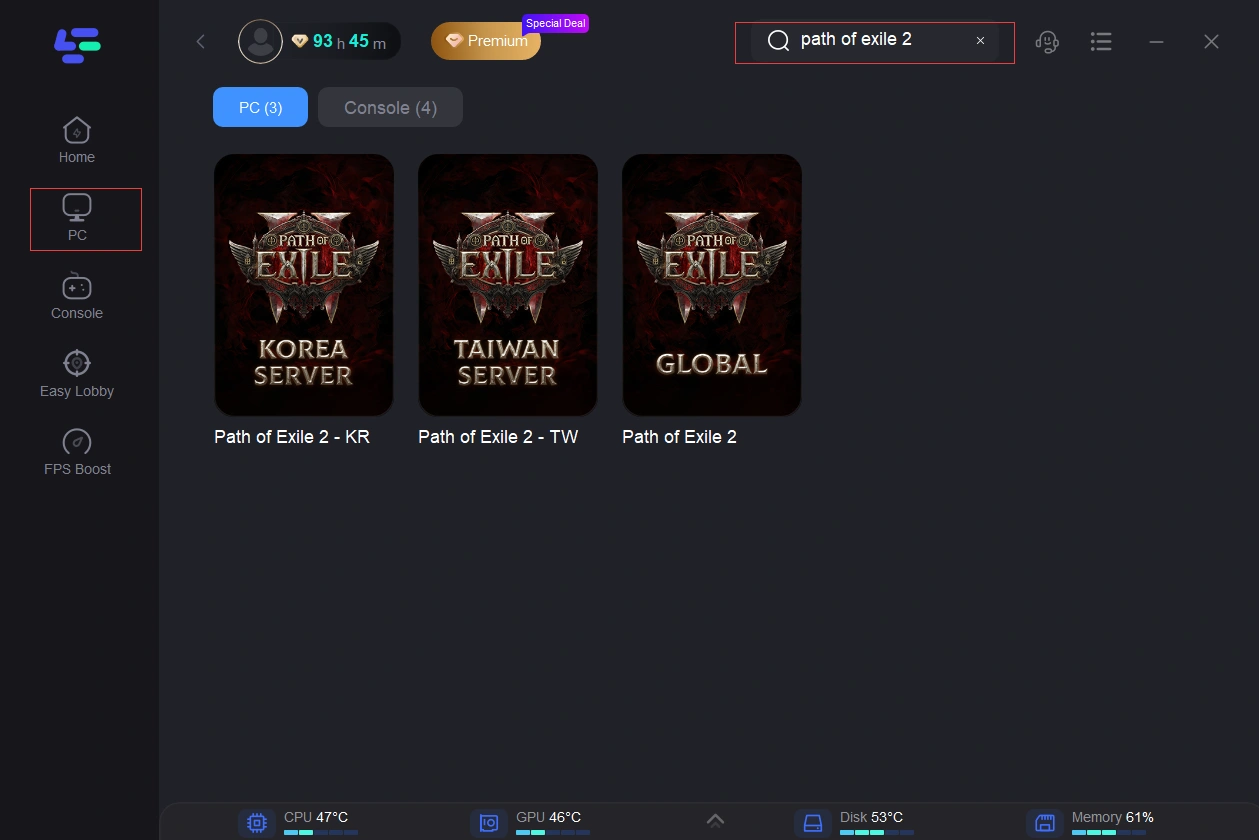
By using LagoFast, you can enjoy smoother gameplay while experimenting with different passive trees and skills. This means you can test various league starters with confidence, knowing that your connection won't hold you back.
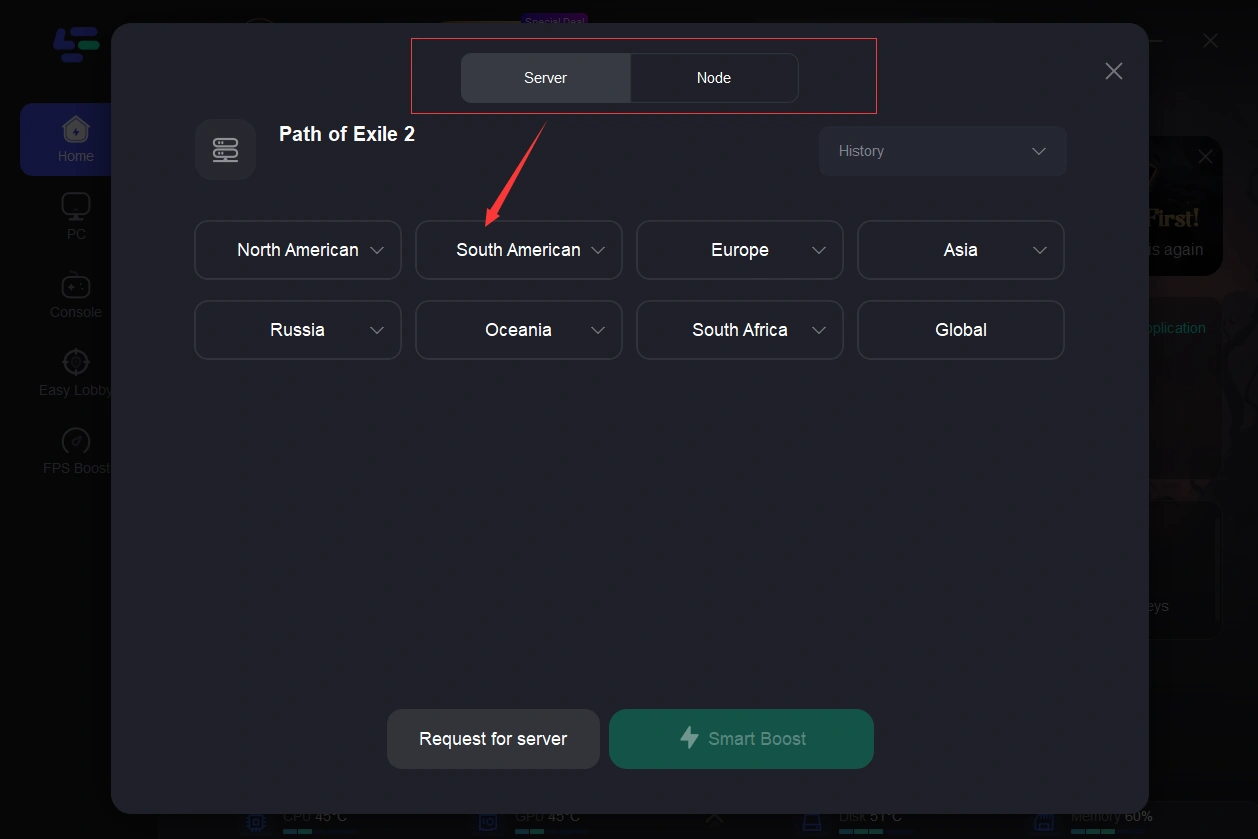
LagoFast also helps you maintain a consistent performance even during peak gaming hours, ensuring that your build testing remains seamless and enjoyable.
What should you prioritize first when rebuilding your tree?
Prioritize the mechanics that changed, not the biggest-looking damage wheel.
Companion and minion-style builds
If your build uses companions, inspect the new companion cluster options first. Patch 0.5.0 adds 19 companion-themed passives, which is enough to change where your efficient pathing starts and ends.
What to do first:
Identify whether your core power now comes from new companion notables instead of old generic damage routes
Check whether your old travel path still makes sense
Rebuild around the strongest companion interaction points first, then add generic survivability after
If you are still following a pre-0.5 minion route, there is a good chance you are wasting points.
Recoup and sustain builds
If your character survives through recoup-style recovery, check the new Life Recoup Speed passives immediately.
The big mistake here is assuming old sustain math still works the same. More recoup speed can change whether a route is worth taking, whether you can drop other sustain nodes, or whether your character feels smooth enough in mapping and bosses.
Good rebuild order:
Lock in life or defensive baseline first
Test how much recoup speed you actually need
Trim redundant sustain if the new passives already solve the problem
Leech-based builds
Leech builds need the most careful rebuild because the mechanic changed in a way that affects tree value directly.
Patch 0.5.0 now allows only one leech instance per resource at a time, and the highest recovery instance takes priority.
That means stacking lots of small leech sources is less attractive than before if your old setup relied on multiple overlapping instances carrying you.
What to check first:
Are you getting one strong, reliable leech source rather than several weak ones?
Are you spending points on leech quantity that no longer pays off the same way?
Are your sustain expectations based on pre-0.5 behavior?
If your old build felt immortal through constant overlapping leech, rebuild from scratch around the new rule instead of trying to patch the old tree.

Totem builds
Totem players should recheck Ancestral Bond before anything else.
The updated keystone now gives:
Your Totem Limit is doubled
No Charge requirement for placing Totems
Totems reserve 75 Spirit each

That is a meaningful identity shift. The upside is obvious, but the Spirit reservation cost means your old supporting setup may no longer fit cleanly.
Practical takeaway: if you spec Ancestral Bond first and your Spirit budget breaks, the rest of your tree may need to move too.
Vaal Pact users
If you used Vaal Pact before, do not assume it is still a free pickup.
The updated version now grants:
50% more amount of Life Leeched
67% less Life Leech speed
Cannot Recover Life other than from Leech
Life Leech effects are not removed when Unreserved Life is Filled
That changes the survivability tradeoff a lot.
This can still be strong, but only if your build can reliably maintain meaningful leech uptime. If you have gaps in damage, weak hit frequency, or shaky boss uptime, the downside is much more punishing now.
How to Use the 0.5.0 Passive Tree Before Choosing a Build
Step 1: Check Defense First
Before damage, decide how your build survives.
Ask:
Are you Life, Energy Shield, or hybrid?
Do you use armour, evasion, block, or avoidance?
How do you recover after taking damage?
Can you handle repeated small hits?
Can you survive bosses?
Step 2: Check Recovery
Damage is not enough. Your build needs recovery.
Look for:
Life leech
Life recoup
Energy Shield recharge
Faster recharge start
Flask support
Regeneration
On-kill recovery
Defensive ascendancy tools
If your build has damage but no recovery, it may fall apart later.
Step 3: Check Reservation Pressure
This matters most for:
Companion builds
Totem builds
Minion builds
Spirit-heavy builds
Aura-style builds
Ask:
How much spirit does the build need?
Do you need many reserved skills?
Does Trusted Kinship help or hurt?
Do totems reserve too much spirit?
Can the build work before good gear?
Step 4: Check Pathing Efficiency
A good passive tree is not just strong nodes. It needs a good route.
Check:
Are you spending too many travel nodes?
Are you getting useful stats while traveling?
Are you crossing the tree too early?
Are you delaying defense?
Can you reach key nodes while leveling?
Step 5: Separate League Starter From Final Build
Some builds may be strong later but weak early.
For example:
Gemling may need quality sources
Companion builds may need spirit and gear
Martial Artist may need key items
Chayula Monk may need confirmed mechanics
ES builds need recovery solved first
Start with a reliable version, then transition later.
How can you compare the 0.5.0 tree with 0.4 quickly?
Use external comparison tools first. They are faster than trying to eyeball the in-game tree.
Useful options players are already using include:
tree viewers that support 0.5.0 data
planners that can overlay what changed since 0.4
side-by-side tree history pages that compare two versions directly
For example, community tools show 0.4 and 0.5 versions side by side, and some highlight:
yellow for changed nodes
red for removed nodes
green for added nodes
Some also let you hover a changed node to see exactly what stat changed. That is the fastest way to catch hidden rebuild traps.
It also helps that the official passive tree JSON for 0.5.0 was made available, which is why community planners updated quickly.
If you want a practical workflow, do this:
Load your old route in an external planner
Compare it against 0.5.0
Check every keystone and sustain cluster you relied on
Only after that, import or reference the build in-game
If you need more help with planner workflow, see our Path of Exile 2 build planner guide.
Does the in-game Build Planner let you edit builds?
No, not in the way many players expect.
The in-game Build Planner introduced in patch 0.5 is useful, but its key limitation is simple: it does not create or edit builds inside the client. It reads and displays a file you downloaded.
So if you want to actively make changes, test alternate pathing, or compare multiple versions quickly, an external planner is still the better first stop.
The in-game tool is better treated as a viewer/import companion than your main build workshop.
What mistakes should you avoid when rebuilding for 0.5.0?
Copying a pre-0.5 build without checking every keystone
This is the fastest way to brick your character feel.
Even if the overall archetype still works, changed keystones like Ancestral Bond or Vaal Pact can completely change the cost-benefit math.
Keeping old leech pathing unchanged
This one is huge.
Because only one leech instance per resource now applies at a time, old leech stacking assumptions can be flat-out wrong.
Overcommitting points before checking changed node values
A node that looks familiar may not do the same job anymore. Use comparison overlays and hover details before you commit to a long route.
Confusing the character passive tree with the Atlas tree
Patch 0.5.0 also heavily reworked the Atlas tree, but that is a separate system.
If you are fixing your character build, make sure you are looking at the character passive tree first. Do not mix Atlas planning into your respec process.
Boost Your Game with LagoFast for Epic Speed
Play harder, faster. LagoFast game booster eliminates stutter and lags on PC, mobile, or Mac—win every match!
Quickly Reduce Game Lag and Ping!
Boost FPS for Smoother Gameplay!